Rooted in Place, Rewarded in Kind: The Quiet Profitability of Committing to Lafayette
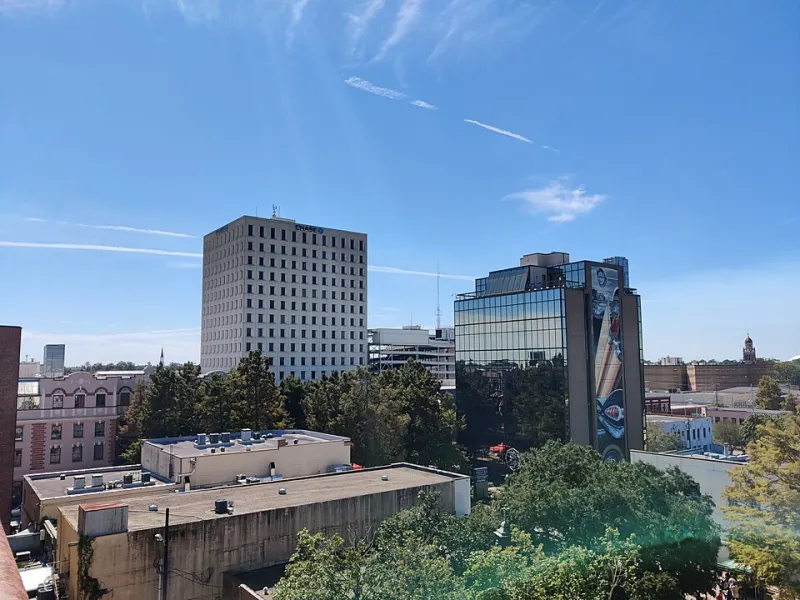
Photo: TheLionHasSeen, CC BY-SA 4.0, via Wikimedia Commons
There is a particular kind of ambition that equates growth with geography—the conviction that a bigger city means a bigger opportunity, that a company cannot truly scale unless it plants a flag somewhere else. It is a persuasive narrative, and Lafayette businesses hear it often. Recruiters whisper it. Investors sometimes demand it. Trade publications rarely challenge it.
But a closer examination of Lafayette's business landscape reveals a different story: one in which companies that resisted the pull of relocation and instead chose to optimize their local operations have frequently outperformed peers who moved on. The advantages they retained were not glamorous. They were, however, deeply practical—and, as it turns out, exceptionally durable.
The Relocation Calculus Most Business Owners Underestimate
When a Lafayette business begins seriously weighing a move to a larger market, the financial projections typically focus on the upside: access to a broader customer base, proximity to venture capital, deeper talent pools. What those projections rarely capture with sufficient precision are the costs of departure.
Regulatory familiarity, for instance, carries real monetary value. A business that has operated in Lafayette for a decade understands the local permitting environment, has established working relationships with municipal departments, and knows how to navigate the administrative rhythms of Acadiana. Transplanting that business to a new jurisdiction means starting that education from scratch—at considerable expense in both time and legal fees.
Then there is the matter of vendor and supplier relationships. Lafayette's commercial ecosystem has a connective tissue that takes years to develop. When a company relocates, it severs those ties, often discovering that equivalent relationships in the destination market come with higher price points, less flexibility, and none of the goodwill that smooths over the inevitable friction of business operations.
Workforce disruption compounds the problem further. Key employees frequently decline to relocate. Institutional knowledge walks out the door. Recruiting in an unfamiliar labor market—one where your company has no reputation—requires both time and premium compensation packages that can strain operating margins precisely when the business needs financial stability most.
What Lafayette Businesses Found When They Stayed
Consider the pattern visible among mid-sized professional services firms in the Lafayette area that evaluated relocation to Houston or Atlanta over the past several years. A number of them conducted serious due diligence—touring office space, meeting with regional chambers, modeling out the financial scenarios. And then they stayed.
Their reasoning was consistent across conversations: the cost of rebuilding what they already possessed in Lafayette exceeded any realistic projection of what they would gain. One firm principal described it plainly—the relationships her company had cultivated with local contractors, municipal clients, and referral partners represented years of compounded investment. Moving would not transfer those assets. It would liquidate them.
For businesses in industries where trust and reputation function as primary competitive differentiators—legal services, financial advising, healthcare administration, specialized contracting—this calculation carries even greater weight. Lafayette clients who have worked with a firm for years do not automatically follow that firm to a new city. They find someone local. The relationship, not the service, was often the product.
The Infrastructure Advantage No One Advertises
Lafayette's physical and institutional infrastructure offers advantages that rarely appear in business relocation analyses but matter considerably in practice. Companies that have been operating here understand the region's transportation logistics, know which industrial corridors experience seasonal congestion, and have adapted their supply chains accordingly. They understand the hurricane preparedness protocols that are simply part of doing business in South Louisiana—and they have built the operational resilience to manage them without disruption.
That operational knowledge is not trivial. For manufacturers, distributors, and logistics-dependent businesses, the ability to anticipate and manage regional conditions efficiently represents a genuine competitive edge over out-of-state competitors who are still learning the environment.
Similarly, Lafayette's energy sector relationships—particularly for businesses that serve or depend upon the oil and gas industry—are embedded in the community in ways that cannot be replicated elsewhere. The informal networks, the industry gatherings, the cross-pollination of expertise between sectors: these are features of Lafayette's economic geography that disappear the moment a company leaves.
Community Goodwill as a Balance Sheet Item
There is a dimension of staying that resists easy quantification but shows up unmistakably in business outcomes: community goodwill. Lafayette is a city where people notice which businesses are invested in the community and which are not. Companies that have sponsored local events, hired locally, partnered with regional nonprofits, and participated in civic life accumulate a form of reputational capital that influences purchasing decisions, referral behavior, and even employee loyalty.
This goodwill is not charity. It is strategy. And it is strategy that requires time and physical presence to build. A company that relocates forfeits that accumulated standing immediately and must begin rebuilding it in a new market where it is, at best, an unknown quantity.
Several Lafayette business owners who considered and ultimately rejected relocation have cited this factor explicitly. One described receiving a significant contract renewal from a longtime client who told her directly that part of the reason they stayed with her firm was that it was a Lafayette company and they preferred to keep their spending local. That preference, multiplied across a client base, is not sentiment—it is revenue.
Optimizing in Place: The Alternative to Moving
For Lafayette businesses that feel constrained by the local market, the more productive question may not be whether to relocate but rather whether all available local opportunities have genuinely been exhausted. In many cases, they have not.
Deepening relationships with existing clients, expanding service offerings tailored to Lafayette's specific industry mix, pursuing regional contracts across Acadiana rather than chasing national ones, and investing in operational efficiency rather than geographic expansion: these are strategies that have delivered meaningful growth for companies that chose depth over distance.
Lafayette Junction exists, in part, to facilitate exactly this kind of thinking—to connect businesses with the local partners, resources, and market intelligence that make staying not merely a safe choice but an actively profitable one.
A Different Definition of Success
The businesses that have thrived in Lafayette by committing to it share a common disposition: they define success in terms of sustainable profitability, strong relationships, and operational resilience rather than geographic footprint. They have found that a well-run business in a market you understand deeply can outperform a struggling business in a market you are still trying to learn.
That is not a consolation prize. It is a legitimate strategic posture—and in Lafayette, it is one that an increasing number of business leaders are adopting with clear eyes and measurable results.
The junction, after all, is right here.